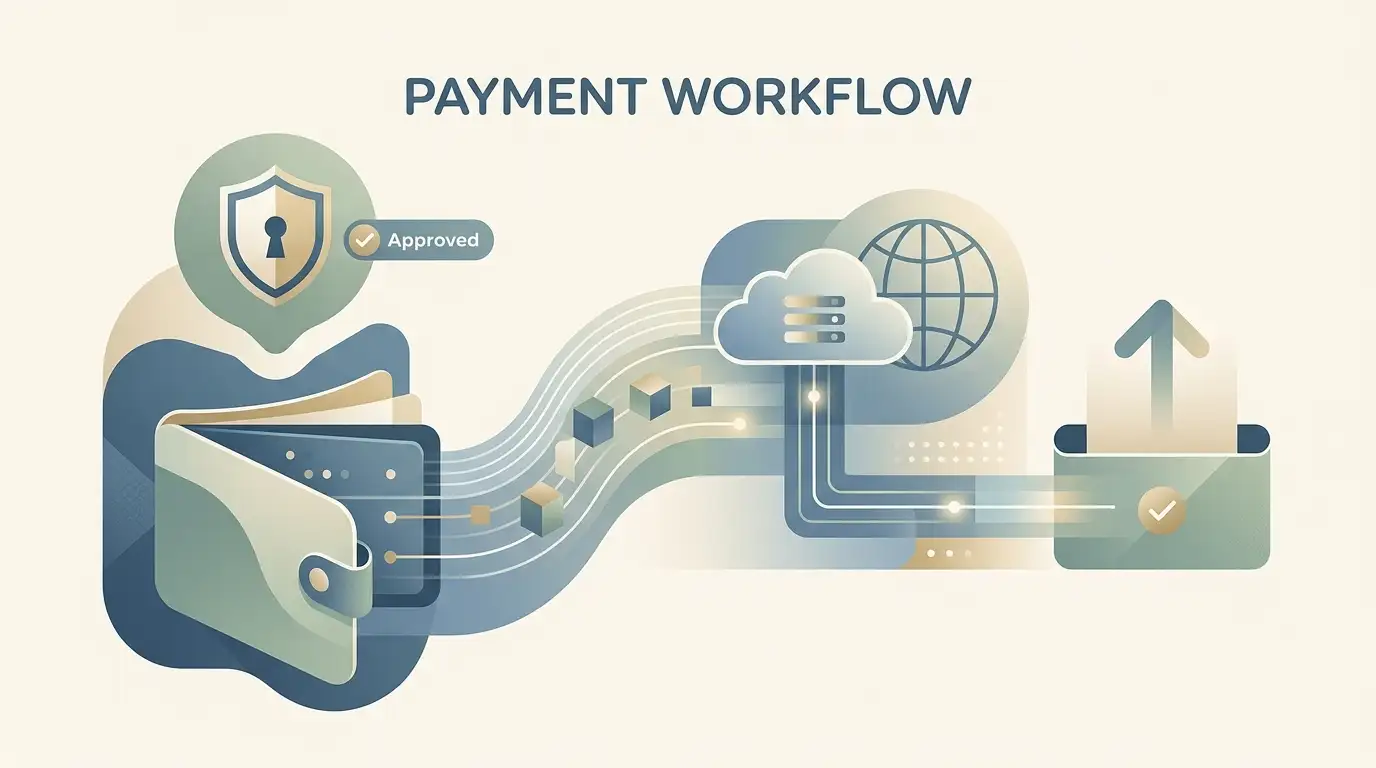
MoonWin Withdrawals: AUD Limits, Times and KYC
This guide gives Australian readers a practical way to assess this part of MoonWin without confusing payment functionality with Australian licensing. MoonWin supports AUD. Current cashier conditions should be checked before any transaction because methods, limits and processing conditions can change.
For the current withdrawal terms effective 5 August 2026, the minimum withdrawal is A$75. MoonWin lists overall processing limits of A$7,500 per day, A$15,000 per week and A$30,000 per month, while a particular payment method can impose its own lower ceiling. MoonWin states that its payment department processes withdrawals within 48 hours; the actual transfer can take up to five business days depending on the payout method, with bank transfers in principle processed within three banking days. KYC can include government-issued photo ID, proof of address and, when requested, evidence for the payment method. A verified phone number is also required before a withdrawal request can be created.
The focus is decision-making: what to verify, what records to keep, and how to separate casino-side processing from the external payment rail.
Table of Contents
- How to approach a withdrawal
- Limits and minimums
- Processing and transfer time
- KYC and account verification
- Method choice matters
- Records worth keeping
- Australian regulatory context
- Practical withdrawal checklist
- Current AUD withdrawal figures
- Processing time and transfer time
- KYC documents MoonWin may request
- How to interpret a pending withdrawal
- Related MoonWin guides
How to approach a withdrawal
Treat a withdrawal as a sequence. Confirm that the balance is withdrawable, open the cashier, select an available route, complete any verification requested through the account, submit the request, and retain the transaction reference. This sequence is more useful than assuming that pressing withdraw means the money has already entered the banking network.
For Australian readers, AUD support makes the amount easier to compare with an everyday budget. It does not guarantee that every method is available, that every intermediary is fee-free, or that a request will arrive on a fixed schedule. The logged-in cashier is the relevant place to inspect current transaction conditions.
Before submitting a large request, note the amount, method and date. If the interface displays a threshold, fee or expected window, keep a record. This creates a clean reference for support and helps distinguish a casino condition from a bank or payment-provider condition.
Limits and minimums
Withdrawal minimums and periodic limits can change. The current terms set the figures listed above, while the logged-in cashier should still be checked immediately before requesting a cash-out because a particular payment method can have its own practical limit.
A limit should be interpreted in context. A maximum per transaction is different from a daily ceiling, and both are different from a monthly cap. Likewise, a minimum can matter more for a small balance than a headline maximum. Check which type of restriction the live interface actually describes.
Do not split requests to evade a control. If the amount cannot be withdrawn as planned, ask support how the current rules apply to the account. A documented answer tied to the current cashier is more useful than an old table copied from another review.
Processing and transfer time
Withdrawal time has at least two stages: MoonWin’s internal handling and the later transfer through the selected payment rail. A request can be under review before any bank or wallet transfer has started. Once released, the external method can add its own settlement time.
The current terms provide the processing windows listed above, while the live account status remains useful for judging an individual request. If the relevant window has passed, contact support with the transaction reference, currency, method and submission date. That lets support identify the request rather than troubleshoot a vague report of a slow withdrawal.
Business days can matter for bank-related routes. An estimated window is also not the same as a guaranteed arrival time. The practical question is whether the request is pending internally, approved and sent, or already visible to the receiving provider.
KYC and account verification
MoonWin’s terms provide for identity verification around account and payment controls, including the document categories listed above. An individual account can still be asked for additional evidence when needed. If verification appears, complete it through the secure route provided by the site.
Keep account details accurate and use payment methods that belong to you. Name, address or payment ownership mismatches can create extra work during a withdrawal review. Resolving those details before a large cash-out is usually easier than changing several account fields while a transaction is pending.
Never send a seed phrase, private key or unrelated sensitive information to someone claiming to be support. If you are asked for documents, verify that the upload route belongs to the account or official support process and check that the request explains what is needed.
Method choice matters
The fastest deposit method is not automatically the fastest withdrawal method. Incoming and outgoing payment routes can have different controls, and a method available for deposits may not appear for cash-outs. Check the options presented to the logged-in account instead of relying on a generic payment-logo list.
The original deposit route can also influence what happens later. Payment controls may favour returning funds through a related method or may trigger checks when a new withdrawal destination is introduced. That makes payment choice a two-way decision from the start.
For the broader AUD picture, use the parent MoonWin payments guide. It covers currency handling and payment selection, while this page keeps the focus on the cash-out workflow.
Records worth keeping
Keep the transaction reference, submission time, amount and selected method. If support provides a case number, add it to the same record. This information is useful if the request moves through several stages or if the receiving bank later asks when the transfer was released.
Screen captures can help, but avoid exposing full payment credentials or identity documents in ordinary notes. The goal is to preserve transaction evidence without creating a new privacy risk. A concise chronology is usually more useful than a large collection of unrelated screen captures.
If a request is cancelled or rejected, record the reason shown before trying again. Repeatedly resubmitting without understanding the cause can make the history harder to follow and does not solve an account-verification or method-eligibility issue.
Australian regulatory context
That distinction matters during a payment dispute. Seeing Australian dollars in the cashier does not itself establish access to an Australian statutory dispute-resolution scheme. Readers who consider licensing central to their decision should review the dedicated licence and legal-context page before depositing.
For an existing withdrawal, keep the immediate troubleshooting focused on the account, the current terms, the transaction reference and the payment rail. Regulatory context is important, but it should not be used as a substitute for identifying the actual stage of a pending transaction.
Practical withdrawal checklist
Before submission, confirm the withdrawable balance, current method, account-name match and any verification request. Read the live interface for current minimums, maximums, fees and timing. If a bonus is active, check whether its terms affect the balance before assuming the full displayed amount can be withdrawn.
After submission, avoid making unnecessary account changes while the request is being reviewed. If the current stated window passes, contact support with precise transaction details. If MoonWin says the payment has been sent, the next useful question is whether the receiving provider can trace it.
The strongest way to judge MoonWin withdrawals is therefore not a promise of instant payment. It is whether the process is understandable at each stage and whether you can document the amount, method, verification status and transfer progress when something needs follow-up.
Current AUD withdrawal figures
MoonWin’s terms effective 5 August 2026 set the minimum withdrawal at A$75. The same withdrawal policy lists maximum processed amounts of A$7,500 per day, A$15,000 per week and A$30,000 per month, unless a specific promotion says otherwise. The terms also note that the maximum for a particular request can depend on the payment method, so an amount above a payment-system limit may be paid in instalments.
These figures answer three different questions and should not be collapsed into one number. The A$75 figure is the minimum request size. The daily, weekly and monthly figures are overall processing limits stated in the terms. A payment method can still impose its own practical ceiling, which is why the cashier shown to the account remains important when deciding how to request a withdrawal.
Processing time and transfer time
The current terms separate MoonWin’s own processing from the time required for the payment rail to complete a transfer. MoonWin states that its payment department processes withdrawals within 48 hours. It also says that the actual transaction time depends on the payout method and its workload and can take up to five business days. For bank transfers specifically, the terms say payouts are in principle processed within three banking days.
This distinction helps when following up on a withdrawal. A request can move through an internal review stage before the payment provider or bank completes the transfer. If the request is still inside the stated processing window, record the submission time and current status. If the status stops changing beyond the relevant window, contact support with the withdrawal date, amount, method and any reference shown in the account rather than submitting duplicate requests.
KYC documents MoonWin may request
MoonWin’s current KYC terms identify the main document categories used for account verification. They include a government-issued photo ID such as a passport, driver’s licence or national ID, and proof of current address such as a utility bill or bank statement. The terms also allow MoonWin to request additional information or evidence, including proof of the payment method, when needed to verify the account.
The withdrawal policy separately says verification documents can be requested before a payout is processed and names ID, payment-system evidence and utility bills as examples. It also requires a verified phone number before a withdrawal request can be created. The practical result is that a withdrawal can depend on both the payment instruction and the account-verification status. Keep the personal details on the account consistent with the documents you submit and use the requested upload or support route rather than sending sensitive documents through unrelated channels.
How to interpret a pending withdrawal
A pending withdrawal does not have one universal explanation. First check whether the account is waiting for identity, address, payment-method or phone verification. Next check whether MoonWin has completed its own processing step. Only after that should you compare the elapsed time with the transfer window for the chosen payout method. This sequence avoids treating every delay as a payment-system failure when the account may still be waiting on a KYC step.
If support is needed, provide a concise timeline: when the request was submitted, the amount in AUD, the payout method, the current account status and whether any verification request has already been completed. Do not send passwords, seed phrases or unrelated identity documents. A focused chronology gives support enough context to distinguish an account-verification issue from an internal processing delay or an external payment delay.
Related MoonWin guides
Created by the ”Moonwin” editorial team.